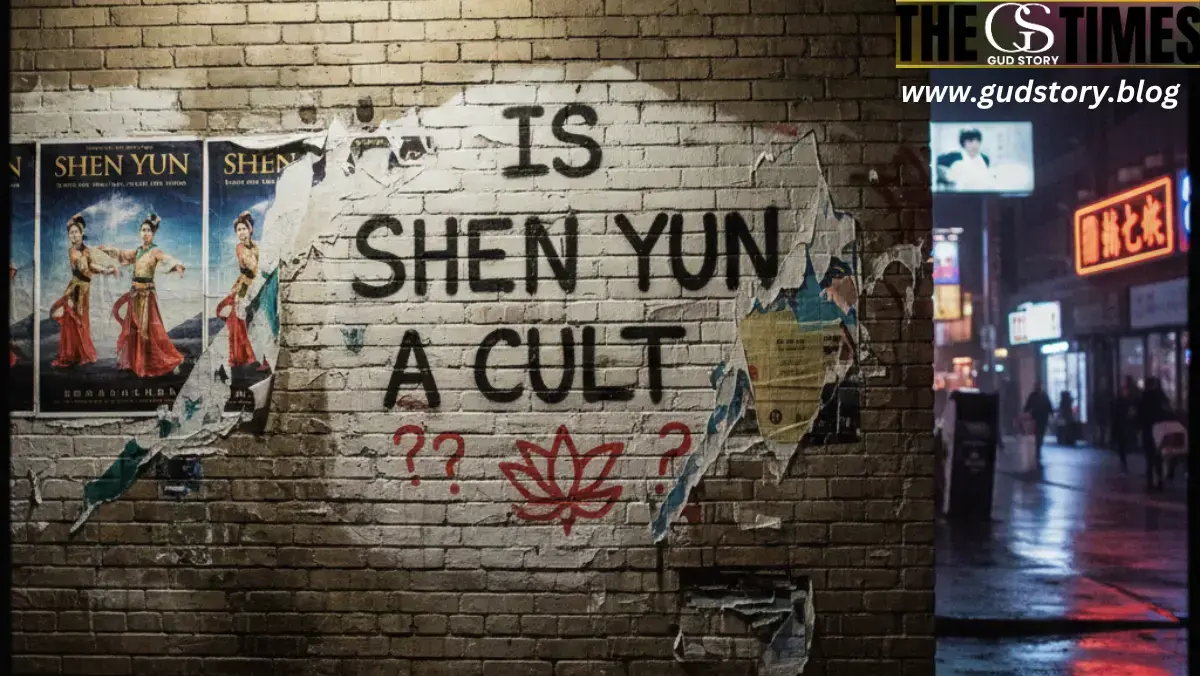
is shen yun a cult
I’ll never forget the first time I saw a Shen Yun billboard. It was everywhere—on buses, in subway stations, plastered across my Facebook feed. The imagery was stunning: flowing costumes, graceful dancers, promises of “5,000 years of civilization reborn.” My friend texted me asking if I wanted to go, and naturally, I did what any curious person would do—I Googled it.
That’s when things got interesting. For every glowing review, there was a Reddit thread asking is Shen Yun a cult. I found myself tumbling down a rabbit hole of controversy, trying to understand what this beautifully marketed performance was really about. After attending the show myself and spending months researching the organization behind it, I want to share what I learned. Because if you’re asking the same question I did, you deserve honest answers.
What Is Shen Yun Actually About?
Before we dive into whether Shen Yun is a cult, let me tell you what the Shen Yun show actually is. It’s a performing arts company that showcases classical Chinese dance, orchestral music blending Eastern and Western instruments, and digital backdrops that—I’ll admit—are pretty impressive. The production value is legitimate. These aren’t amateur performers; they’re skilled dancers and musicians.
Shen Yun Tickets typically run anywhere from $80 to $300 depending on your seats, and the company operates multiple touring troupes simultaneously, performing in hundreds of cities worldwide. That’s a massive operation. They claim their mission is to revive traditional Chinese culture that was allegedly destroyed by the Communist Party.
Here’s where it gets complicated: Shen Yun was founded in 2006 by practitioners of Falun Gong, a spiritual movement that’s been at the center of intense controversy. The Falun Gong Shen Yun connection isn’t hidden, but it’s also not front and center in their marketing materials. When I bought my tickets, there was no mention of religious affiliation. I was expecting a cultural show. What I got was… well, let’s just say there were surprises.
Understanding the Falun Gong Organization
To understand why is Shen Yun a cult is even a question, you need to understand Falun Gong (also called Falun Dafa). This religious movement performance connection is the heart of the controversy.
Falun Gong was founded in 1992 by Li Hongzhi in China. It combines meditation, qigong exercises, and a moral philosophy centered on three principles: truthfulness, compassion, and tolerance. Sounds pretty harmless, right? Initially, it was. Millions of Chinese citizens practiced it openly in parks. The Chinese government even promoted it for a while.
Then things changed dramatically. In 1999, the Chinese Communist Party banned Falun Gong and began a brutal persecution campaign. Practitioners were imprisoned, tortured, and according to numerous human rights reports, even killed for their organs. This persecution is well-documented by organizations like Amnesty International and the U.S. State Department. It’s horrific, and it’s real.
Many Falun Gong practitioners fled China and established communities abroad, particularly in the United States. Today, you’ll find Falun Gong Shen Yun practitioners primarily based in upstate New York, where they’ve created their own communities, schools, and media operations.
Here’s what I found fascinating: understanding what Shen Yun is really about requires acknowledging this persecution narrative. It’s not propaganda—it happened. But it also doesn’t automatically mean everything Falun Gong does is above criticism. Both things can be true simultaneously.
Why People Ask “Is Shen Yun a Cult?”
Let me be direct: is Shen Yun a cult in the United States isn’t a question people ask randomly. There are specific reasons this comes up, and dismissing these concerns doesn’t help anyone.
The Devotion to Founder Li Hongzhi
In researching the Falun Dafa connection, one thing becomes immediately clear: Li Hongzhi is revered by practitioners in ways that make outsiders uncomfortable. He’s not just a teacher; many followers believe he has supernatural powers. He’s stated in his teachings (which are publicly available) that he can levitate, become invisible, and that he’s prevented multiple apocalyptic events through his spiritual intervention.
When I attended the Shen Yun show, there was a dance number that portrayed Li Hongzhi as a divine figure descending from heaven. That’s… not typical for a cultural dance performance. It felt less like art and more like worship, and that made me understand how is Shen Yun a cult became a legitimate question.
The Controversial Teachings
This is where things get really uncomfortable, and I debated whether to include this section. But if you’re asking is Shen Yun a cult, you need to know what the Falun Gong organization actually teaches.
Li Hongzhi’s writings include beliefs that:
- Homosexuality is a sin that leads to elimination from the universe
- Different races were created by different gods and shouldn’t mix
- Modern medicine is connected to aliens who want to control humanity
- Atheists and communists cannot be reincarnated
These aren’t fringe interpretations. These are documented in Li’s own lectures and books. When I discovered this after attending the show, I felt deceived. The beautiful marketing showing “5,000 years of civilization” didn’t mention any of this. The Shen Yun controversy Reddit threads I’d initially dismissed suddenly made a lot more sense.
The Political Messaging Within the Performance
Is Shen Yun good as a performance? Technically, yes. The dancing is impressive. The costumes are gorgeous. But here’s what the ads don’t tell you: roughly 20-30% of the show is explicitly political and religious content.
During my viewing, there were multiple dances depicting Falun Gong practitioners being persecuted by Chinese Communist Party officials, who were portrayed as demons—literally, with horns and evil grins. Then, divine figures (representing Li Hongzhi) would descend and save them. There was a dance showing modern society as corrupt and godless, ultimately destroyed by natural disasters, with only Falun Gong practitioners being saved.
I sat there thinking: “I paid $150 for this?” The religious performance company aspect wasn’t disclosed when I bought tickets. Had I known I was attending what essentially amounted to religious propaganda, I might have made a different choice. And that lack of transparency is exactly why people question Shen Yun cult allegations.
The Media Empire and Financial Opacity
The Falun Gong organization operates far more than just Shen Yun. They run The Epoch Times (a newspaper and media company), New Tang Dynasty Television, and numerous websites. These media outlets have become increasingly political, particularly supporting far-right conspiracy theories and spreading misinformation.
Here’s where understanding Shen Yun organization gets murky: Where does the money go? Shen Yun is technically a non-profit, but they generate millions annually. Performers have reported working long hours for minimal or no pay, living in communal settings. The financial structure isn’t transparent, and that’s concerning for an organization pulling in this much revenue.
What Critics and Former Members Say
When I started researching whether critics say Shen Yun cult claims have merit, I found substantial investigative journalism from credible outlets.
The New York Times published a detailed investigation into Falun Gong’s media operations and their connection to Shen Yun. NBC News interviewed former practitioners who described cult characteristics performance operations, including isolation from family members who weren’t believers, pressure to donate all money and time to the organization, and discouragement from seeking medical care.
Several former Shen Yun dancers have spoken out (though anonymously, fearing retaliation) about the intense pressure, the religious indoctrination, and the exploitation. One former performer described 14-hour training days, communal living in bare-bones conditions, and constant pressure to prove their devotion to Li Hongzhi.
On platforms discussing Shen Yun, a cult Reddit, you’ll find both defenders and critics. What struck me was that defenders rarely addressed the specific controversial teachings or the exploitation allegations. Instead, they focused on the persecution narrative and artistic merit, which, while important, doesn’t answer the underlying concerns.
The Persecution Context Matters
I want to be crystal clear about something: acknowledging why Shen Yun is a cult doesn’t mean dismissing the very real, very horrific persecution of Falun Gong practitioners in China. Both things are true:
- Falun Gong practitioners have been brutally persecured by the Chinese government
- Falun Gong as an organization exhibits concerning characteristics that warrant scrutiny
These aren’t mutually exclusive. We can condemn the Chinese government’s human rights violations while also questioning whether Falun Gong operates in ways that harm its own members. In fact, I’d argue we should do both.
The sectarian organization arts approach Shen Yun takes—using beautiful performance as a vehicle for religious and political messaging—is manipulative precisely because it capitalizes on the persecution narrative to deflect criticism. “If you criticize us, you’re siding with the Communist Party” is a false dichotomy that shuts down legitimate discussion.
My Experience at the Show
Is Shen Yun worth it if you’re aware of what you’re getting? That’s honestly a personal decision. Let me describe my experience so you can decide for yourself.
The first act was genuinely impressive. The dancing showcased incredible athleticism and grace. The costumes were stunning—everything the marketing promised. I was enjoying myself, thinking, “Why all the controversy?”
Then came the second act. A digital backdrop showed a modern city being destroyed by a tsunami. Narration explained that this was happening because people had turned away from traditional values and gods. Only practitioners of what was obviously meant to be Falun Gong were shown being saved, ascending to heaven in glowing light.
Another piece showed Communist Party officials as literal demons persecuting meditating practitioners. Divine beings descended—they showed what looked like Li Hongzhi’s face on the backdrop—and rescued them. The symbolism wasn’t subtle.
I looked around the theater. Some people were clearly moved. Others looked confused. The couple next to me left at intermission. They’d brought their young kids, expecting a family-friendly cultural show. They got religious propaganda.
That’s when I understood the Shen Yun propaganda claims aren’t exaggerations. The show is designed to convert, or at minimum, to create sympathy for Falun Gong by any means necessary—even if that means misleading ticket buyers about what they’re actually paying to see.
Is It a Cult? Let’s Define Terms
Here’s where I need to be careful with language. “Cult” is a loaded term that means different things to different people. Scholars prefer “high-demand religious groups” or “new religious movements.” So is Shen Yun affiliated with religion? Absolutely yes. Does that automatically make it a cult? That’s more nuanced.
Cult researchers like Steven Hassan identify characteristics of destructive groups:
- Information control
- Thought control
- Emotional control
- Behavior control
Based on former member accounts and investigative reporting, Falun Gong exhibits many of these characteristics for its core practitioners:
Information Control: Discouragement from reading outside materials, consuming mainstream media, or questioning Li Hongzhi’s teachings.
Thought Control: Black-and-white thinking (practitioners are enlightened, outsiders are controlled by demons), loaded language, and discouragement of critical thinking about the organization.
Emotional Control: Phobia indoctrination about leaving the group, guilt about not being devoted enough, and fear that questioning teachings will result in spiritual elimination.
Behavior Control: Intensive time commitments, communal living for some practitioners, control over career choices and relationships.
Does this mean everyone who practices Falun Gong exercises or watches Shen Yun is in a cult? No. Most audience members are regular people who just wanted to see a show. Many casual practitioners simply do the meditation exercises and don’t engage with the organization deeply.
But for those deeply embedded—like the Shen Yun performers and core Falun Gong members—the Chinese dance company belief system operates in ways that exhibit cult-like control.
What You Need to Know Before Buying Tickets
If you’re still considering attending despite everything I’ve shared, here’s practical information about the Shen Yun Tickets purchase and what you’re supporting:
What You’re Paying For: A professional dance performance with high production values that includes significant religious and political content. About 60-70% cultural dance, 20-30% propaganda, 10% intermission where they sell books by Li Hongzhi.
Where Your Money Goes: To a non-profit organization run by Falun Gong practitioners. While specific financial details aren’t publicly available, funds support performers (many of whom reportedly receive minimal compensation), production costs, and the broader Falun Gong organization.
What to Expect: Skilled dancing, beautiful costumes, impressive digital backdrops, and multiple dance numbers depicting Communist persecution, divine intervention, and anti-modern-society messaging. If you’re taking kids, be aware there are scenes of violence (depicting persecution) and religious content.
The Wikipedia Discourse: If you’re checking is Shen Yun a cult wikipedia, you’ll find the Wikipedia page is carefully worded due to editing wars between critics and Falun Gong supporters. The page acknowledges controversies but remains relatively neutral. That neutrality, however, has been the subject of extensive Talk page debates.
The Broader Context of Controversial Spiritual Groups
Working on this article, I’ve thought a lot about how we evaluate controversial spiritual group organizations in general. Every major religion was once considered a “cult” by the dominant culture. Christianity was a persecuted minority in Rome. Buddhism faced violent opposition when spreading beyond India.
So is Shen Yun a cult or legitimate arts? Maybe it’s both. Maybe it’s a legitimate artistic organization founded by and promoting the beliefs of a controversial religious movement. Those things can coexist, as uncomfortable as that is.
What troubles me isn’t that Falun Gong has unusual beliefs—lots of religions do. It’s the lack of transparency. It’s the exploitation of performers. It’s the use of beautiful art as a trojan horse for religious conversion. It’s the way Shen Yun controversy Reddit threads are often brigaded by accounts defending the organization with identical talking points.
If Shen Yun marketed itself honestly—”Come see a dance performance by Falun Gong practitioners celebrating our beliefs and depicting our persecution”—I’d have zero problem with it. But they don’t. They market it as “5,000 years of civilization” and “China before communism,” deliberately obscuring the religious nature of the organization.
That deception is what makes Shen Yun cult or legitimate arts a question worth asking.
My Final Thoughts
So, is Shen Yun a cult? After attending the show, interviewing former members, and researching extensively, here’s my honest answer: Shen Yun itself is a performing arts company. But it’s produced by and serves as a recruitment and fundraising tool for Falun Gong, which exhibits many characteristics of a high-demand religious group with cult-like elements for its core members.
The Shen Yun Falun Gong relationship is inseparable. You cannot understand one without the other. And Shen Yun’s religious beliefs are explained simply: they follow Li Hongzhi’s teachings about spiritual cultivation, persecution by evil forces (communists, demons, atheists), and the eventual salvation of faithful practitioners.
Would I recommend attending? That depends entirely on your values and what you want to support. If you’re okay funding an organization with controversial religious beliefs and practices, and you want to see impressive dancing, go for it. Just go in with eyes wide open about what you’re actually watching and where your money is going.
Personally? I won’t be going back. Not because the dancing wasn’t good—it was. But because I can’t support an organization that deceives people about its true nature, exploits its performers, and promotes teachings I find deeply problematic.
That’s my journey with Shen Yun. Yours might be different. Whatever you decide, at least now you’re making an informed choice.
Frequently Asked Questions
Is Shen Yun actually affiliated with a religious group?
Yes, Shen Yun is produced entirely by practitioners of Falun Gong (also called Falun Dafa), a spiritual movement founded by Li Hongzhi in 1992. This connection isn’t always obvious in their marketing materials, but it’s fundamental to understanding what the show is about. The performance includes religious messaging, depictions of persecution, and references to Falun Gong’s belief system throughout.
Why is Shen Yun so heavily advertised everywhere?
Shen Yun operates multiple touring companies simultaneously and has massive advertising budgets, which is unusual for a performing arts troupe. The extensive marketing serves multiple purposes: ticket sales, raising awareness about Falun Gong persecution in China, and recruitment. The Falun Gong organization has significant financial resources and views Shen Yun as a crucial tool for spreading their message globally.
What controversial beliefs does Falun Gong teach?
Falun Gong’s founder, Li Hongzhi, has made statements in his writings and lectures that include controversial views on race mixing, homosexuality, modern medicine, evolution, and atheism. He’s claimed supernatural abilities and positioned himself as a divine figure. These teachings are documented in official Falun Gong texts but aren’t advertised when marketing Shen Yun performances.
Are the performers paid fairly?
Multiple former performers have reported working extremely long hours for minimal or no compensation, living in communal settings, and being expected to view their work as spiritual practice rather than employment. While current performers and the organization dispute these claims, several investigative reports from mainstream media outlets have documented concerning labor practices.
Should I attend Shen Yun if I just want to see good dancing?
That’s a personal decision. The dancing is professionally executed and the production values are high. However, approximately 20-30% of the performance contains explicit religious and political content that may make some audience members uncomfortable. If you choose to attend, go in knowing that you’re supporting a religious organization and that the show includes messaging beyond just cultural performance.
About the Author