Water in a basement waterproof doesn’t just cause damp floors — it damages framing, fuels mold, and lowers your home’s value. You can stop most leaks and moisture problems by targeting the real causes: poor exterior drainage, foundation cracks, hydrostatic pressure, or missing interior drainage and a sump system. This article shows which fixes work for each problem and what to prioritize for lasting results.
In this article Basement Waterproofing You’ll get clear, practical guidance on how waterproofing works, the tradeoffs between interior and exterior methods, and which solutions fit your budget and goals. Expect straightforward steps you can act on, whether you plan to DIY small repairs or hire a pro for foundation and drainage work.
Basement Waterproofing Fundamentals
You’ll learn what typically lets water into basements, which methods professionals and DIYers use to stop it, and the clear signs that a problem exists so you can act before damage escalates.
Common Causes of Basement Water Intrusion
Hydrostatic pressure forces groundwater through foundation cracks and porous concrete when exterior grades slope toward your house or downspouts discharge near the foundation. Because pressure increases with saturated soil, water often enters at the lowest points—wall-floor joints, footing cracks, and construction joints.
Surface runoff from clogged gutters, compacted landscape soil, or adjacent hardscaping directs stormwater to foundation walls. Frozen-thaw cycles and soil settlement widen hairline cracks over time, making previously dry walls vulnerable. Sanitary or storm line backups and sump failures also let water into basements quickly and unpredictably.
Types of Basement Waterproofing Methods
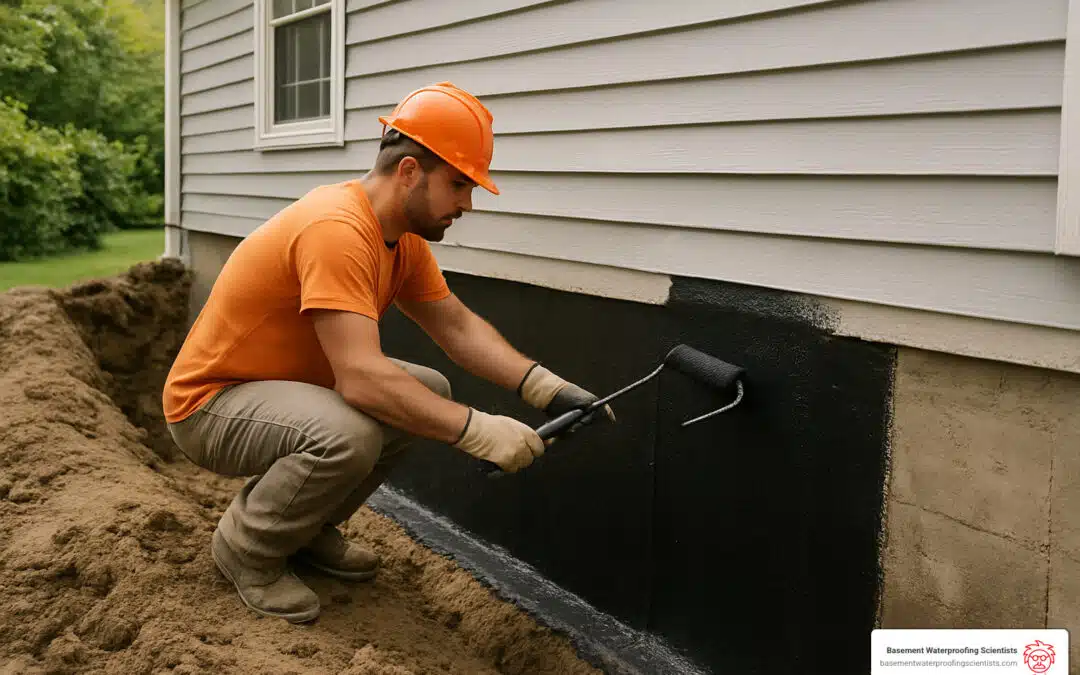
Exterior waterproofing stops water before it reaches the foundation by excavating around the perimeter, applying a membrane or liquid barrier, and installing exterior drainage (weeping tiles) that lead to a discharge point. This approach addresses hydrostatic pressure most effectively but involves heavy excavation and cost.
Interior systems are less invasive: they include interior perimeter drains tied to a sump pump, patching cracks with hydraulic cement, and applying tanking membranes or sealants to walls. These control water that penetrates the wall but do not reduce exterior hydrostatic pressure. Combine methods when necessary—exterior membranes plus an interior drain give the best long-term protection in high-water-table situations.
Warning Signs of Water Problems
Look for active signs: pooled water on the floor after rain, damp spots on walls, and dripping at the wall-floor seam. Odors—musty or moldy—signal persistent moisture and possible mold growth behind finishes.
Also inspect for passive indicators: efflorescence (white mineral streaks), flaking or powdery concrete, bowed walls, and slow-moving sump pumps. Track frequency and timing: seasonal wetness or water only after heavy storms suggests drainage or grading issues, while constant seepage points to structural cracks or a high water table.
Effective Solutions and Best Practices
You need a mix of interior and exterior measures, a system chosen for your foundation type and soil conditions, and an ongoing maintenance plan to keep the space dry and healthy.
Interior Waterproofing Techniques
Interior waterproofing focuses on controlling water that enters or accumulates inside your basement. Install an interior perimeter drain (activating a sump pump) to capture seepage from cracks or saturated footing areas. Use a sump pump with battery backup and a high-capacity discharge to handle heavy inflow during storms or power outages.
Seal visible cracks with hydraulic cement or epoxy injections for structural cracks; use masonry waterproofing paint only for minor dampness, not active leaks. Apply a capillary break coating to block moisture vapor through concrete walls and floors. Combine measures: drain + repair + mechanical removal (sump) gives the most reliable interior defense.
Exterior Waterproofing Strategies
Exterior waterproofing prevents water from reaching your foundation exterior. Excavate to the footing level and apply a polymer-modified bitumen or elastomeric waterproof membrane to the foundation, ensuring continuous coverage below grade. Add a rigid or drainage board over the membrane to protect it from backfill damage.
Install or repair footing drains (French drains) at the base of the foundation to route groundwater into a sump or storm system. Grade soil away from the foundation by at least 6 inches over the first 10 feet and extend downspouts at least 6–10 feet away or into a drain. These steps reduce hydrostatic pressure and cut off water before it contacts the wall.
Choosing the Right Waterproofing System
Match your solution to the leak source, foundation type, and budget. For water tracking along the floor-wall joint or heavy groundwater, choose an interior perimeter drainage system with a sump pump. For widespread wall leakage from exterior saturation, prioritize exterior membrane plus proper grading and drainage.
Consider soil type (clay holds water; sandy soils drain), basement use (finished living space needs cleaner solutions), and long-term access (exterior excavation is disruptive but durable). Request written warranties for materials and labor, and get a contractor’s inspection report showing the leak path to avoid unnecessary work.
Maintaining a Waterproof Basement
Regular inspection and maintenance preserve whichever system you install. Check gutters and downspouts monthly during wet seasons; clear debris and ensure downspouts discharge at least 6–10 feet from the foundation. Test your sump pump quarterly by pouring water into the pit and verify the float, check valve, and discharge line are functional.
Inspect interior walls and floors for new cracks, efflorescence, or musty odors; address small issues promptly with sealants or epoxy before they enlarge. Keep exterior grade and landscaping stable—avoid adding soil against the foundation and replace compacted soil that slopes toward the house. Maintain records of repairs, pump servicing, and warranty documents for future reference.
About the Author