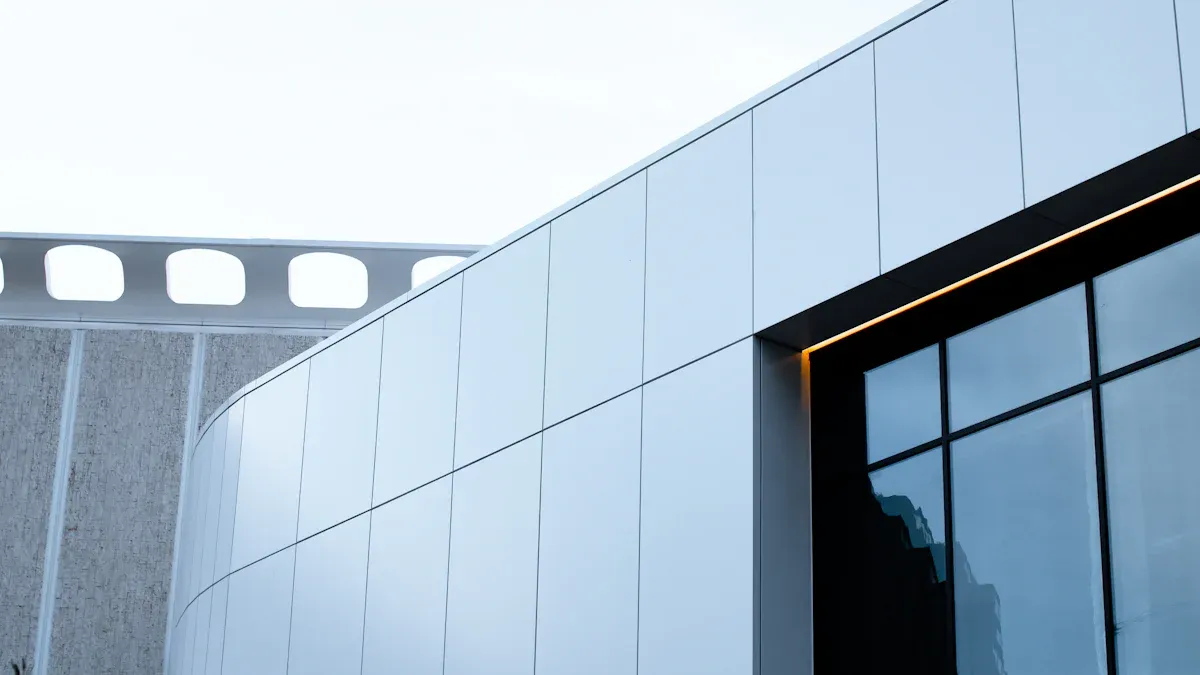
You need reliable aluminum composite panel suppliers who balance durability, finish options, and code-compliant fire performance for your facade, signage, or interior project. Choose suppliers that offer clear specifications, fire-rated core options, consistent color and finish choices, and fabrication or installation support to reduce risk and keep timelines on track.
This article will show how to evaluate suppliers by quality, compliance, and service, and highlight emerging materials and fabrication trends that affect cost and aesthetics. Expect practical criteria and actionable tips to help you pick a supplier that matches your technical needs and design goals.
Finding the Best Aluminum Composite Panel Suppliers
You need suppliers that deliver consistent material quality, clear specifications, and reliable lead times. Focus on measurable criteria: core type and thickness, finish options, fire performance, certifications, and regional manufacturing capacity.
Criteria for Choosing Reliable Suppliers
Evaluate suppliers by concrete factors that affect performance and risk. Check core material (PE vs. FR) and core thickness; FR cores reduce fire risk and may be required by code. Confirm aluminum skin thickness—common options are 0.015″ (0.4 mm) to 0.03″ (0.8 mm)—because skin thickness affects dent resistance and longevity.
Assess fabrication capabilities: CNC cutting, bending, and perforation availability will determine if the supplier can meet your design. Review lead times, minimum order quantities, and logistics—longer lead times raise schedule risk. Ask for samples and establish quality control metrics like coating adhesion, corrosion resistance, and flatness tolerances.
Top Regions for Aluminum Composite Panel Manufacturing
Major production hubs include China, Europe (Germany, Italy), North America (Canada, US), and Japan. China supplies high volumes with competitive pricing and a broad range of finishes; quality varies, so verify factory audits and test reports. Europe often offers advanced finishes and stricter environmental controls.
North American and Japanese manufacturers emphasize fire-retardant cores and certified production processes, which can simplify compliance for projects in those markets. Consider proximity—sourcing regionally can reduce freight costs, customs delays, and carbon footprint.
Comparing Product Lines and Specifications
Compare product datasheets side-by-side for these key specs: core type and flame spread rating, aluminum skin thickness, coil-coated paint system (PVDF, FEVE), surface finish (matte, gloss, metallic), and panel size/tolerance. Prioritize suppliers that publish independent lab tests for fire performance (e.g., ASTM E84, EN 13501) and mechanical properties.
Request sample panels to verify color match and finish under your site lighting. Confirm optional treatments such as anti-graffiti coating, PVDF warranty length, and available substrate thicknesses. Use a simple comparison table to score suppliers on these attributes before shortlisting.
Supplier Certifications and Industry Standards
Insist on suppliers with verifiable certifications and third-party testing. Key documents include: ISO 9001 (quality management), ISO 14001 (environmental), and product test reports for fire (ASTM E84, EN 13501-1), VOC emissions, and salt spray corrosion. CE marking or equivalent regional approvals matter for projects in Europe.
Verify coating system warranties and paint manufacturer approvals (e.g., 20-year PVDF warranty). Ask for factory inspection reports, material traceability, and copies of test certificates—not just claims on a website. Maintain a checklist of required certifications for procurement and compliance review.
Trends and Innovations Among Aluminum Composite Panel Suppliers
Suppliers are shifting toward lower-carbon materials, advanced coatings, and greater design flexibility to meet stricter codes and client demands. These moves affect sourcing, lead times, and the range of finish and fire-performance options you can specify.
Sustainability Practices in Production
Suppliers increasingly use recycled aluminum in face sheets and aim to reduce primary-aluminum content in cores. You should expect suppliers to disclose recycled-content percentages and to provide Environmental Product Declarations (EPDs) for projects requiring lifecycle data.
Many manufacturers replace polyethylene cores with mineral-filled or fire-retardant cores to meet fire-safety regulations like NFPA 285 and local codes. Suppliers also report lower-energy extrusion and rolling processes and often operate closed-loop painting lines to cut volatile-organic-compound emissions.
Procurement can prioritize mills with ISO 14001 certification, downstream coating lines that use low-VOC PVDF or fluoropolymer systems, and fabrication partners who offer panel reclamation or take-back programs.
Emerging Technologies and Features
Coating technology keeps advancing: PVDF with improved color retention, anti-graffiti finishes, and self-cleaning hydrophobic layers are common options you can request. These coatings prolong façade life and reduce maintenance costs.
Core innovations include mineral-filled and fire-resistant cores that meet stricter reaction-to-fire testing. Some suppliers now offer integrated thermal breaks, acoustic cores, or ventilated-rain-screen-ready profiles to simplify installation and improve building performance.
Digital fabrication is more widespread. You can tap CNC routing, robotic bending, and factory-applied perimeter seals to get tighter tolerances and faster onsite assembly. Many suppliers also provide BIM models and cut lists to reduce waste and coordination errors.
Customization and Design Capabilities
You can specify bespoke colors, metallics, and woodgrain finishes with tight color-match tolerances across production runs. Suppliers commonly offer extended palettes from standardized RAL or BS codes to custom-matched multi-layer coatings.
Panel sizes and gauges now vary widely: you can order large-format panels with reinforced cores for fewer joints, or ultra-thin façades for lightweight cladding. Fabricators offer perforation patterns, 3D radiused panels, and bonded composite systems for integrated signage or backlit elements.
Delivery options include pre-assembled façade modules and kitted panels labeled for sequence of installation. This reduces onsite labor and speeds schedules, but you should confirm lead times for custom coatings and special core materials before issuing final orders.
About the Author