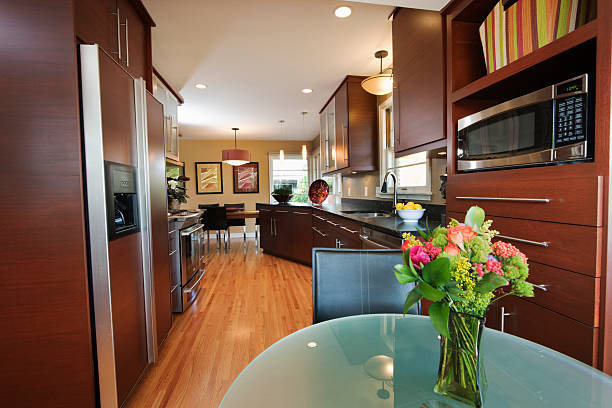
Contemporary interior design of kitchen and dinning room area with breakfast table in the foreground.
Kitchen design in Columbus, OH is changing fast. Homeowners across Dublin, Worthington, and Upper Arlington are rethinking what a kitchen should do. It’s no longer just a cooking space. It’s the social center of the home.
Integrated bar spaces are leading that shift. More Columbus homeowners are combining their kitchen and entertaining areas into one cohesive layout. The result handles Tuesday dinners and Saturday gatherings with equal ease without feeling like two rooms forced together.
The benefits are practical. Efficiency improves when your entertaining setup shares space with your cooking zone. Guests gather naturally at the bar instead of crowding the prep area. And the aesthetic result is a kitchen that looks genuinely designed.
A well-planned kitchen cabinet bar is where most successful integrations begin. The cabinetry defines the bar zone, creates dedicated storage, and ties the bar visually into the broader kitchen design. Get the cabinet layout right and everything else follows.
Understanding Integrated Bar Spaces
What They Are and Why They Work
An integrated bar isn’t a separate room or a standalone furniture piece. It’s built into the kitchen architecture, same cabinetry style, same countertop, same hardware finish. It belongs there because it was designed to be there.
It handles beverage prep without cluttering the main cooking zone. It creates a natural gathering point that keeps guests engaged and out of the cook’s way. In Dublin and Columbus, OH homes where entertaining is a regular part of life, that versatility has real daily value.
Popular Design Features
Custom cabinetry does most of the work. Glass-front upper cabinets display glassware. Lower cabinets store spirits and bar tools. Open shelving adds visual lightness and keeps frequently used items accessible.
Counter height is a key early decision. Standard kitchen height is 36 inches. The bar height is 42 inches. Comfortable bar stool seating typically falls between those two figures. Decide this at the design stage not after cabinets are ordered.
Types of Integrated Bar Spaces
Wet Bars
A wet bar includes a dedicated sink. It’s the most functional option cocktail prep, glass rinsing, and ice handling all happen at the bar without using the main kitchen sink. The most practical placement is along an existing plumbing wall or at an island end that connects easily to existing supply lines.
Dry Bars
A dry bar skips the plumbing. It’s storage-focused wine, spirits, glassware, and tools without a sink. Simpler, less expensive, and still highly functional for most home entertaining. For smaller Columbus kitchens, a 24–36 inch dry bar section with open shelving above and a beverage refrigerator below creates a real bar presence without a full renovation.
Mini Bars and Island Bar Ends
The island mini bar is the most popular format in Columbus homes right now. One end of the island facing the living area gets dedicated to bar functions. Wine storage, a small beverage refrigerator, glass rack, and counter overhang for two or three stools. It formalizes what was already happening naturally around the island.
Full-Scale Bars with Seating
A full-scale integrated bar dedicated cabinetry, complete seating, and full beverage storage is the premium option. It works best in larger Dublin and Columbus, OH kitchens with open floor plans. Guests settle at the bar naturally. The host moves between cooking and serving without leaving the room.
Design Aesthetics
Modern vs. Traditional
Columbus kitchens span a wide style range from contemporary new builds in Dublin to traditional colonials in Worthington. Modern bars feature flat-panel cabinetry, quartz countertops, and minimal hardware. Traditional bars draw on warmer wood tones, raised panel doors, and granite or butcher block surfaces.
The strongest designs blend both. Traditional cabinet profiles in a clean contemporary color. Modern slab doors in a warm natural wood finish. Columbus homeowners have become genuinely sophisticated about this balance.
Lighting and Color
Pendant lights over the bar counter provide task lighting and anchor the entertaining zone visually. Under-cabinet LED strips add ambient warmth. Dimmer switches are essential they shift the space from daytime kitchen to evening bar atmosphere without structural changes.
Two-tone cabinetry is the dominant color trend. Neutral perimeter cabinets paired with a deeper tone navy, charcoal, forest green on the bar section or island creates contrast that feels intentional rather than accidental.
Layout and Storage
Flow Comes First
The bar zone should be accessible to guests without routing them through the cooking area. In an island bar, the seating side faces away from the stove. In a dedicated bar wall, position it closest to the living area not the cooking side. This separation sounds simple. Executed correctly, it makes the kitchen function dramatically better during entertaining.
Storage Logic
Every item needs a designated place that makes operational sense. Spirits in lower closed cabinets. Glassware in upper cabinets at a genuinely reachable height. Bar tools in a dedicated counter-height drawer. Pull-out trays for bottles make a significant functional difference over fixed shelving. Specify these details early.
Budgeting Basics
| Bar Type | Estimated Cost |
| Dry bar integration | $1,500 – $4,000 |
| Island mini bar | $2,000 – $5,500 |
| Wet bar with plumbing | $4,000 – $12,000 |
| Full-scale integrated bar | $8,000 – $20,000+ |
Smaller Columbus kitchens have real options too. A 24-inch bar section with open shelving, a compact refrigerator, and two stools creates genuine bar function in minimal square footage. Constraint often produces smarter design than unlimited space does.
Columbus Trends Right Now
Sustainability is now a standard expectation not a premium. Energy-efficient appliances, FSC-certified wood cabinetry, and low-VOC finishes are what Columbus homeowners ask for by default.
Smart home integration is accelerating. App-connected wine coolers, touchless faucets, and automated lighting scenes are being specified at the design stage in newer Dublin builds not retrofitted later.
Local character sets Columbus kitchens apart. Industrial aesthetics from the Short North. Rustic farmhouse influences from Ohio’s countryside. Locally sourced live-edge wood countertops and handmade ceramic tile from Columbus artisans. These details give Columbus kitchens a distinctiveness that national suppliers can’t replicate.
This is where Kitchen Cabinets in Columbus design is most exciting right now. Local cabinet makers understand the Columbus aesthetic, the blend of Midwestern warmth and modern sensibility that Dublin and Columbus, OH homeowners respond to. They’re building bar integrations that reflect this city’s character, not a generic national trend.
For homeowners ready to explore options, custom kitchen design services in Columbus OH can walk you through layout configurations, cabinet choices, and realistic pricing for your specific space.
And for anyone comparing local specialists, kitchen cabinet bar design in Dublin Columbus OH offers a locally focused starting point for finding the right design partner.
Conclusion
Integrated bar spaces have become one of the most requested features in Columbus kitchen design. They add function, improve social flow, and create a kitchen that reflects how people in Dublin and Columbus, OH actually live.
The options are broad from a simple dry bar section to a full-scale wet bar with smart technology and locally crafted details. The key is planning early. Cabinet configuration, layout, electrical, and plumbing decisions made at the design stage cost nothing to change. Made after installation, they’re expensive.
Columbus has skilled cabinet makers, talented designers, and local artisan suppliers who know this market. Consult one early. Build it right. And create the kitchen your home and your lifestyle actually deserves.
About the Author